
Throughout history, powerful kingdoms have risen, flourished, and disappeared. While civilizations such as Egypt, Greece, and Rome are widely remembered, many remarkable kingdoms have faded from popular memory despite their significant contributions to human history. These forgotten kingdoms once controlled vast territories, influenced trade routes, and shaped cultures across continents.
Why Ancient Kingdoms Disappeared
Many ancient kingdoms vanished due to wars, invasions, economic decline, natural disasters, or political instability. Over time, newer civilizations emerged, and historical records were lost, causing these once-great societies to be forgotten.
Archaeological discoveries continue to reveal fascinating details about these lost kingdoms and their achievements.

The Kingdom of Kush
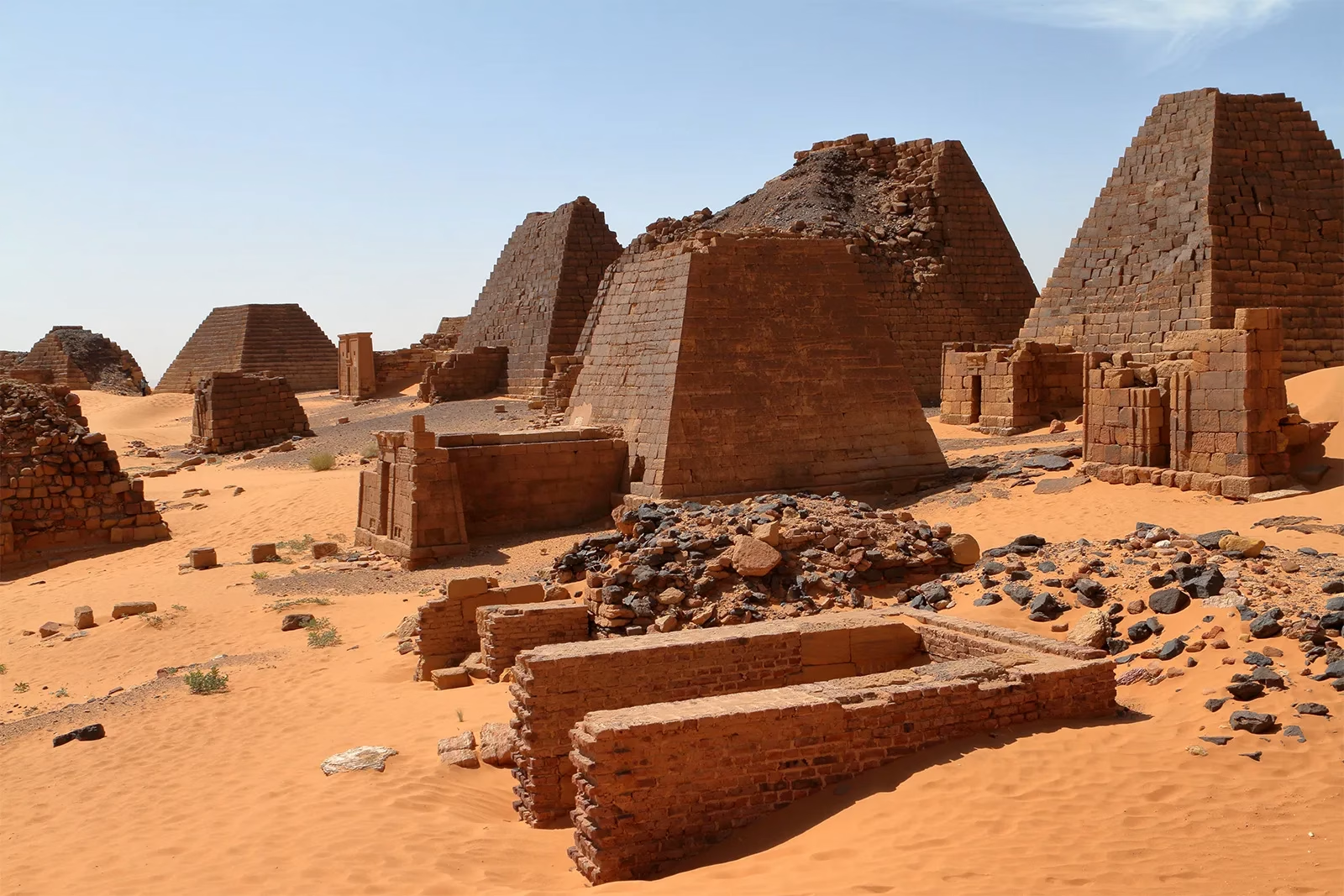
Located south of ancient Egypt in modern-day Sudan, the Kingdom of Kush was one of Africa’s most powerful civilizations. It became wealthy through trade and controlled key routes linking Africa to the Mediterranean world.
The Kushites were skilled builders and created impressive pyramids similar to those found in Egypt. At one point, Kush even conquered Egypt and ruled as its Twenty-Fifth Dynasty.
The Kingdom of Aksum
The Kingdom of Aksum flourished in present-day Ethiopia and Eritrea between the first and eighth centuries. It became a major trading power connecting Africa, the Middle East, and Asia.
Aksum was among the first kingdoms to adopt Christianity as a state religion. Its towering stone monuments, known as stelae, remain remarkable engineering achievements.
The Mitanni Kingdom
The Mitanni Kingdom emerged in northern Mesopotamia around 1500 BCE. Known for its skilled horse trainers and military innovations, Mitanni played a key role in regional politics.
Despite its influence, the kingdom eventually disappeared due to conflicts with neighboring powers, leaving behind limited historical records.
The Kingdom of Urartu
Located near modern-day Armenia, Turkey, and Iran, Urartu was a powerful kingdom during the Iron Age. The kingdom developed advanced irrigation systems, impressive fortresses, and strong military defenses.
Urartu’s engineering achievements influenced later civilizations in the region.
The Nabataean Kingdom
The Nabataeans built a prosperous trading empire in the deserts of the Middle East. Their capital city, Petra, remains one of the world’s most impressive archaeological sites.
The kingdom controlled important trade routes carrying spices, incense, and luxury goods. Their expertise in water management allowed them to thrive in harsh desert conditions.
Contributions of Forgotten Kingdoms
These ancient societies contributed to:
- Trade and commerce
- Architecture and engineering
- Agriculture and irrigation
- Religious development
- Cultural exchange
Many modern innovations have roots in these overlooked civilizations.
Lessons from Lost Civilizations
Studying forgotten kingdoms teaches us about resilience, innovation, and the factors that contribute to both success and decline. Their stories remind us that even the most powerful civilizations are not immune to change.
Conclusion
Forgotten kingdoms played crucial roles in shaping world history. Although many have disappeared from popular memory, their contributions continue to influence modern society. Ongoing archaeological research ensures that these remarkable civilizations will not remain forgotten forever.